
Full Face vs Modular Helmet: Which is Safer?
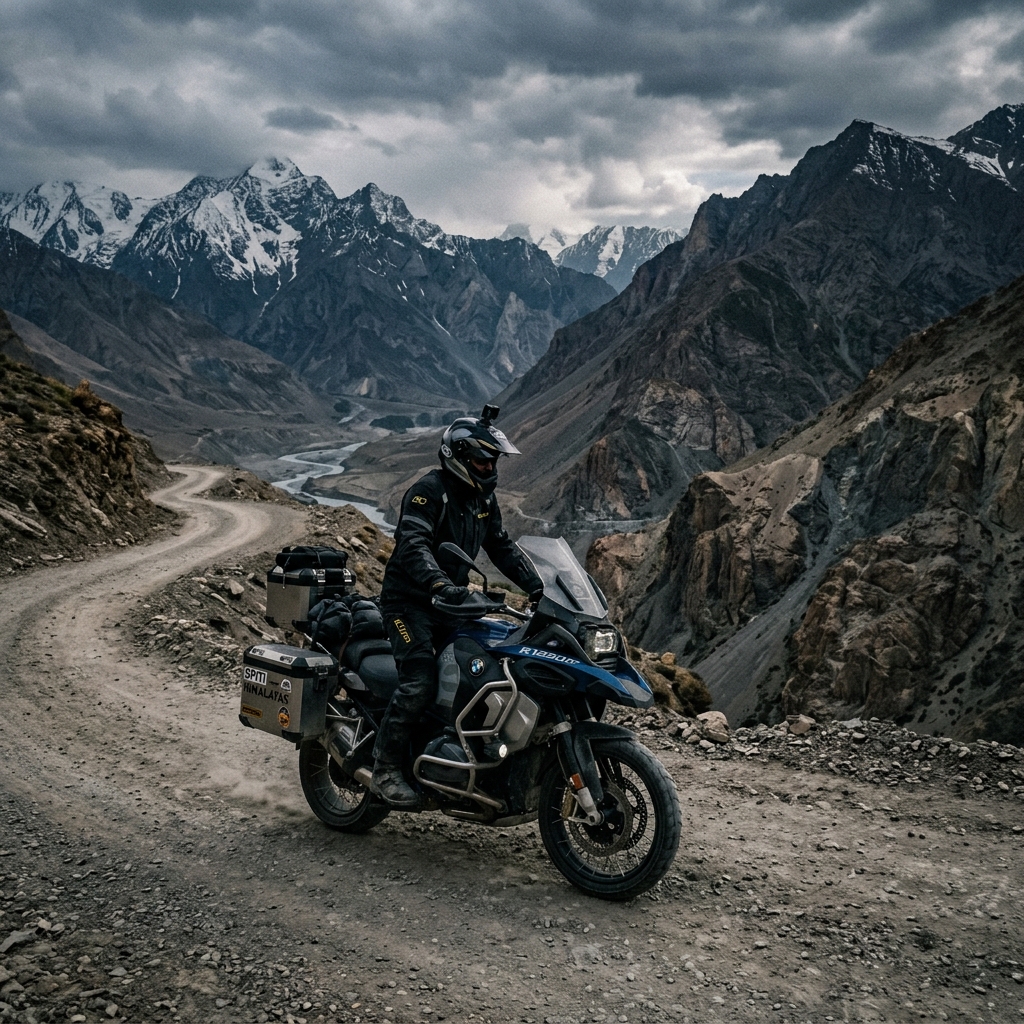
If you ride long distances, you have likely stood at a refueling station, struggling to take off your tight full-face helmet just to drink water or speak to the attendant. At that moment, a modular flip-up helmet seems like the ultimate upgrade.
But when you are sliding down the pavement at 80 km/h, convenience doesn't matter. What matters is the structural integrity of the helmet shell wrapping your skull.
Choosing between a Full-Face and a Modular (Flip-Up) helmet is one of the most critical decisions a rider has to make. While full-face helmets are the gold standard for crash protection and track safety, modular helmets offer unparalleled convenience for touring and urban commuting. This article goes beyond marketing claims to compare shell construction, hinge locking mechanisms, wind noise, weight, and safety certifications, helping you choose the right helmet for your riding style.
The Structural Core: Construction Differences
To understand the safety difference, we must examine how these two helmet types are built:
        Full-Face Shell                         Modular (Hinged) Shell
     (Continuous Outer Shell)                  (Two-Piece Jointed Shell)
          ____________                              ____________
         /            \                            /            \
        /   ________   \                          /   ________   \
       |   /        \   |                        |   /        \   |
       |  |  (O)(O)  |  |                        |  |  (O)(O)  |  |
       |   \________/   |                        |   \________/====[ Hinge Pivot
       |                |                        |                |
        \______________/                          \________/\____/
                                                            \===/ <- Seam Joint
Full-Face Helmets
A full-face helmet is molded as a single, continuous outer shell. Whether made of polycarbonate, fiberglass, Kevlar, or carbon fiber, the shell surrounds your entire head—including the chin bar—without any seams, hinges, or joints.
When an impact occurs, the outer shell flexes slightly to distribute the kinetic energy across its entire surface area, allowing the underlying EPS (Expanded Polystyrene) liner to compress evenly and absorb the shock.
Modular Helmets
A modular helmet uses a two-piece shell design. The main shell covers the crown, sides, and back of your head, while a separate chin bar assembly is attached to the main shell via two pivot hinges.
This design allows you to lift the chin bar, converting the helmet from a full-face profile to an open-face (3/4) profile. When closed, the chin bar is locked in place using metal hooks or pins that latch onto receivers on the main helmet body.
Crash Statistics: The Otte Impact Study
Many riders assume that facial impacts are rare. However, authoritative accident research reveals that the chin and jaw areas are the most vulnerable parts of a rider's head during a crash.
The famous Dietmar Otte Accident Research Study (Hannover) analyzed real-world motorcycle crashes to map impact locations on helmet shells. The findings are a warning to anyone riding with inadequate chin protection:
                          Otte Helmet Impact Map
                                 ________
                               /   1.1%   \
                             /  6.0%  6.6%  \
                            /                \
                           | 3.8%  [ ]  4.4%  |
                           |                  |
                           | 1.8%       2.0%  |
                            \   1.8%  2.2%   /
                              \   /    \   /
                         22.0%  \_______/  34.6%  <-- High Impact Zones
                                 \     /
\___/ (Chin Guard)- Left Chin Guard Area: 22.0% of all impacts.
- Right Chin Guard Area: 34.6% of all impacts.
- Combined Chin/Jaw Impacts: 56.6% of all crash forces are concentrated on the chin bar.
If you crash, there is a greater than 50% chance that your helmet will hit the ground chin-first. In a full-face helmet, this force is absorbed by a rigid, one-piece structure. In a modular helmet, this force is borne entirely by the hinge pivots and metal locking pins. If the locking mechanism fails under impact, the chin bar can flip open, leaving your face completely unprotected.
<Callout type="danger"> Riding a motorcycle with a modular helmet in the "open" position is extremely dangerous. If you fall, the raised chin bar behaves like a lever. When it hits the ground, it catches the pavement, twisting your neck violently and causing severe rotation-based spinal injuries. </Callout>
Hinge Mechanics: The Failure Point Risk
The safety of a modular helmet depends on its locking mechanism. If the latches are made of cheap plastic, they can shear off or deform during an impact, causing the chin bar to release.
                          Metal Locking Pin Latch
                           _________________
                          /                 \
     Main Shell Hook ---> [  O <=== metal    ]
                          |       locking    |
     Chin Bar Pin    ---> [  o    pin        ]
\_________________/- Metal vs. Plastic Latches: Budget modular helmets often use plastic latches to save weight and manufacturing costs. You should avoid these. Look for modular helmets that feature metal locking pins and metal hooks (like the SMK Gullwing or LS2 Valiant). Metal-on-metal connections are much less likely to release under load.
- ECE 22.06 Testing Standards: The latest European safety standard, ECE 22.06, features more rigorous testing for modular helmets. It tests impact resistance with the chin bar both locked closed and open. It also measures rotational forces, ensuring that modular hinge mechanisms do not snag on the road and transmit dangerous twisting forces to the rider's neck.
P/J Homologation: The Legality of Flipping Up
If you plan to ride with the chin bar raised, you must understand P/J homologation. In countries that follow ECE standards, it is illegal to ride with a modular helmet open unless it has a double homologation rating.
- The 'P' (Protective) Rating: Certifies that the helmet is tested and approved as a protective full-face helmet. The chin bar must remain closed while riding.
- The 'J' (Jet) Rating: Certifies that the helmet is tested and approved as an open-face helmet. This means the helmet remains structurally stable, and the chin bar will not slip down into your field of vision when raised.
- P/J Double Homologation: Helmets with this rating (like the LS2 Valiant II) feature a locking switch that keeps the chin bar in the raised position. This rating guarantees that you can legally and safely ride with the chin bar up or down.
Without a P/J rating, a modular helmet is only certified for safety when closed. If you ride with the chin bar open, you are not only exposing your face to impact, but you may also face fines in regions that strictly enforce ECE standards.
Wind Noise: The Seam Turbulence Issue
At highway speeds, wind noise is more than an annoyance; it is a safety issue. High noise levels cause fatigue, headaches, and reduce your situational awareness on the road.
Full-face helmets are quieter because they have a continuous shell that seals out wind. Modern full-face helmets use wind-tunnel tested spoilers and chin curtains to deflect wind around the base of the helmet.
Modular helmets have seams where the flip-up chin bar meets the main shell. No matter how well-engineered the rubber gaskets are, these seams create microscopic gaps. Air rushing over these gaps at 100 km/h creates turbulence, resulting in high wind noise. Furthermore, the internal channels needed for the chin bar latch cables can transmit whistling sounds directly to your ears.
Weight and Muscle Fatigue
The hinge mechanisms, release buttons, locking hardware, and internal drop-down visors in modular helmets add weight:
- Average Full-Face Weight: 1350g to 1500g (carbon fiber models can drop below 1250g).
- Average Modular Weight: 1600g to 1850g.
An extra 250 grams might seem minor when holding a helmet in your hands, but after four hours of highway riding, that extra weight puts significant strain on your neck and shoulder muscles. This extra weight also increases the rotational mass of the helmet during a crash, which can exacerbate neck strain.
If you choose a modular helmet for long-distance touring, prioritize models that use lightweight composite shells or carbon fiber to offset the weight of the hinge hardware. Keep your neck muscles strong and take regular breaks to prevent fatigue.
Ventilation: The Standstill vs. Riding Balance
Helmet ventilation is evaluated in two different scenarios:
        At a Standstill (Traffic/City)              At Highway Speeds
       +-------------------------------+     +-------------------------------+
       |   Modular Wins Hands Down     |     |    Full-Face Channels Air     |
       |   Flip up entire chin bar     |     |    More efficiently without   |
       |   Instant, complete airflow   |     |    creating noise or drag     |
+-------------------------------+ +-------------------------------+- Urban Commuting: For city riders stuck in stop-and-go traffic under the hot sun, modular helmets are a lifesaver. Flipping up the chin bar at a red light provides instant cooling and fresh air.
- Highway Riding: At speed, a closed full-face helmet ventilates more efficiently. Its single-piece shell allows designers to create deep EPS channels that use the Venturi effect to pull hot, humid air out of the exhaust vents, keeping your head cool without creating excessive wind resistance.
Head-to-Head Comparison Matrix
Here is how these two helmet configurations compare across key categories:
| Feature | Full-Face Helmet | Modular (Flip-Up) Helmet |
|---|---|---|
| Safety Level | Maximum (Rigid, single-piece shell) | High (If metal-latched and closed) |
| Weight | Lightweight (Typically 1350g - 1500g) | Heavy (Typically 1600g - 1850g) |
| Wind Noise | Low (Fewer seams and tight gaskets) | Moderate to High (Air leaks through seams) |
| Convenience | Low (Must remove helmet to drink/speak) | Maximum (Flip up to talk, drink, or refuel) |
| Track Approval | 100% Approved (Mandatory for racing) | Not Approved (Strictly banned on tracks) |
| Ventilation | High at Speed (Engineered Venturi ports) | Maximum at Rest (Flip up chin bar) |
The Verdict: Who Should Buy What?
Choose a Full-Face Helmet if:
- You participate in track days or fast weekend rides.
- You prioritize maximum safety and structural shell strength above all else.
- You ride at high speeds where wind noise and neck fatigue are major issues.
- You want a lightweight helmet that reduces neck strain over long hours.
Choose a Modular Helmet if:
- You are a touring rider who stops frequently to check maps, take photos, refuel, or drink water.
- You commute daily in congested city traffic where standstill heat requires maximum ventilation.
- You wear glasses and want a helmet that is easier to put on and take off without removing your frames.
- You choose a high-quality, dual-certified (P/J homologated) model with a metal-on-metal locking system.
Conclusion
A modular helmet is a compromise between safety and convenience. While modern engineering and P/J homologation have made modular helmets safer than ever, they cannot match the structural rigidity of a single-piece full-face helmet. Evaluate your typical riding conditions, speeds, and comfort needs honestly. Whichever style you choose, never compromise on safety certifications: ensure it carries both ISI and ECE markings, and keep it locked closed whenever you are in motion.
Frequently Asked Questions (FAQ)
1. Does the chin bar of a modular helmet open automatically in a crash?
No, not on certified helmets. High-quality modular helmets use dual-action release buttons that require deliberate pressure to open, preventing accidental opening during a crash. However, cheap models with plastic latches are at risk of shearing off and opening under severe impact.
2. Can I install a Bluetooth intercom on a modular helmet?
Yes. Modern modular helmets include speaker pockets and microphone channels. However, since the chin bar flips up, you must use a flexible boom microphone rather than a wired button microphone. Make sure the intercom wiring does not interfere with the hinge locking mechanism.
3. What is the average lifespan of a modular helmet?
Like full-face helmets, the standard lifespan is 5 years from the date of first use, or 7 years from the date of manufacture. However, because modular helmets have moving parts, the hinges, latches, and rubber seals may wear out sooner if you use them frequently.
4. Are carbon fiber modular helmets worth the premium price?
Yes. If you prefer a modular helmet but want to avoid neck fatigue, a carbon fiber modular helmet is a great investment. The carbon fiber shell significantly reduces weight, bringing it closer to the weight of a standard fiberglass full-face helmet.
5. Why are modular helmets banned on race tracks?
Race tracks involve high-speed crashes where riders may slide and tumble repeatedly. In these scenarios, the impact forces can hit the helmet from multiple angles, posing a risk of hinge failure. Track regulations mandate single-piece full-face helmets with double D-ring straps for maximum protection.
6. Do modular helmets leak rain water?
Poorly designed modular helmets can leak rain water through the upper seal where the chin bar meets the brow. High-quality brands feature thick rubber gaskets and drainage channels to prevent leaks, but they require periodic maintenance to keep the rubber from drying out.
7. How do I adjust a loose chin bar on my modular helmet?
If the chin bar feels loose or does not latch securely, do not attempt to adjust the metal pins yourself. Check if the pivot screws have loosened and tighten them to the manufacturer's torque specifications. If the locking mechanism is damaged, contact an authorized service center.
8. Is the chin strap on modular helmets different?
Most modular helmets use a micrometric quick-release buckle (ratchet strap) for convenience. While safe and approved under ECE standards, it is less secure than the double D-ring system found on sport-oriented full-face helmets, which cannot fail or slip once fastened.
Frequently Asked Questions
Are modular helmets as safe as full-face helmets?
Generally, full-face helmets are safer because they feature a single, continuous outer shell with no joints or moving parts. Modular helmets use a hinged pivot system for the chin bar. Under severe impact, this hinge mechanism is a potential failure point, though dual-certified (P/J homologated) modular helmets are highly secure.
What does P/J double homologation mean?
P/J homologation is a certification standard under ECE regulations. The 'P' stands for Protective (approved to ride with the chin bar closed), and the 'J' stands for Jet (approved to ride with the chin bar open). Only ride with the chin bar up if your helmet carries a P/J rating.
Why are modular helmets heavier?
Modular helmets require additional hardware, including metal locking pins, pivot latches, release cables, and hinge plates, which typically add 150 to 250 grams of weight compared to equivalent full-face models.
Are modular helmets noisier at high speeds?
Yes. The seam where the flip-up chin bar meets the main helmet shell creates gaps. Turbulent air enters these seams, producing higher wind noise than a single-piece full-face helmet.
Can I wear a modular helmet on track days?
No. Almost all race track organizers and motorcycle racing federations (like the FMSCI) strictly mandate single-piece, certified full-face helmets with double D-ring chin straps. Modular helmets are not approved for track racing.
Which helmet type has better ventilation?
At a standstill, modular helmets offer superior ventilation because you can flip up the entire face. However, at speed, full-face helmets have more efficient internal EPS airflow channels and vent ports that draw heat out without creating wind turbulence.
What happens if I crash with a modular helmet in the open position?
If you crash with the chin bar open, your chin, jaw, and nose are completely exposed to the pavement. Additionally, the open chin bar acts as a sail, catching the ground and twisting your neck, which increases the risk of severe spinal injuries.
Do modular helmets have sun visors?
Yes, almost all modern modular helmets include an integrated drop-down sun visor, making them popular for touring riders who frequently transition between bright sunlight and dark tunnels.
Keep Reading Guides
Best Helmet Under ₹5000 in India
Looking for top safety on a budget? Here are the best ECE and ISI certified helmets in India under ₹5,000.
How to Choose the Right Helmet Size
An ill-fitting helmet compromises safety. Learn how to measure your head shape, cheek pads, and verify snugness before you ride.